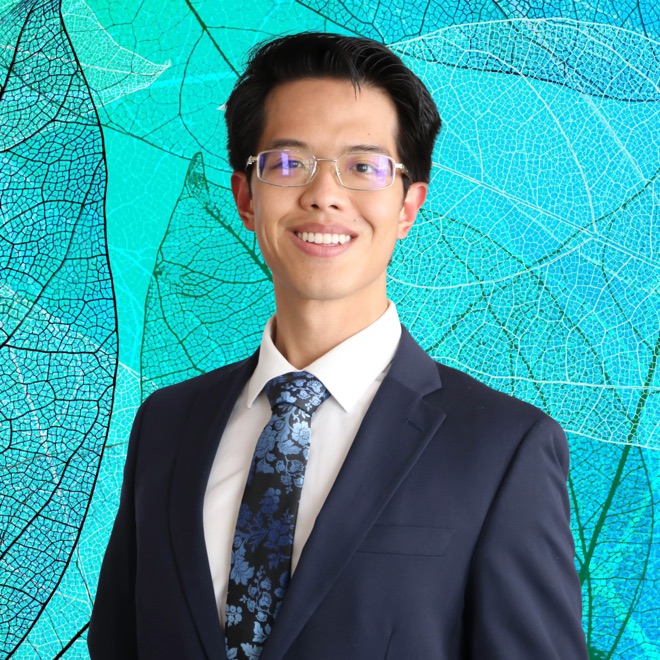
Lead AI Systems & Quantitative DeFi Architect
I architect autonomous AI agents and zero-human pipelines that extract value from decentralized markets, from high-frequency cross-chain arbitrage engines to deterministic risk enforcement with no human override. As a FinTech lecturer and Ph.D. candidate, I bridge cutting-edge research with production-grade systems that ship.
AI DeFi Architect, OPC
Agentic AI × Quant DeFi
Every line of code I write serves one idea: decentralized systems and AI can — and should — make finance fairer for everyone.
Zero-human pipelines are the endgame. I build systems that ingest on-chain data, execute strategies, and enforce risk — all without a single manual step.
Academic insights are only valuable when they hit production. I turn dissertation-level research into open-source tools, backtesting engines, and live trading systems.
From graduate lectures at HKBU to leading hackathons (H.K. Consensus 2025 winner), I make AI and blockchain knowledge accessible — and actionable.
Perfectionism kills momentum. Launch early, learn fast, treat every failure as data. The best systems are forged through relentless iteration.
"The best time to plant a tree was twenty years ago. The second best time is now."
— Chinese Proverb
Building autonomous, zero-human systems that extract value and enforce risk in decentralized markets
LangChain, n8n, Kimi OpenClaw, Autonomous Multi-Agent Systems (MAS), and Execution-as-a-Service (EaaS) architectures that autonomously review smart contracts, run simulations, and mandate on-chain execution.
Python (Web3.py / Brownie), Web3.js, high-frequency cross-chain arbitrage engines, funding rate arbitrage, AMM slippage simulation, and on-chain data analysis & backtesting.
Automated risk management enforced by OpenClaw deterministic logic. Algorithmic threshold enforcement, real-time drawdown protection, and zero-human-override execution protocols.
Protocol-level design, smart contract escrow (Solidity / Rust), cryptographic identity security, zero-human automated pipelines, and cross-chain interoperability architectures.
Abstract — Algorithmic stablecoin reserve controllers are vulnerable to
regime-blind optimization when they calibrate on fair-weather data while ignoring tail events. The
March 2020 BLACK THURSDAY collapse ($8.3 M in losses, 15 % peg deviation) exposed a key vulnerability: models
such as the Stable Aggregate Stablecoin (SAS) systematically omit extreme volatility from
covariance estimates, producing allocations that are optimal in expectation but catastrophic under stress. To
address this gap, we present MVF-Composer, a trust-weighted Mean-Variance Frontier controller
incorporating a Stress Harness for risk-state estimation. The Stress Harness drives multi-agent
simulations that serve as adversarial stress-testers: heterogeneous agents execute protocol
actions under crisis scenarios, exposing vulnerabilities before they manifest on-chain. A complementary
trust-scoring mechanism down-weights manipulative agents, ensuring robustness against adversarial
influence.
Across 1,200 scenarios with black-swan shocks, MVF-Composer reduces peak peg deviation by 57 % and
recovery time by 3.1× versus SAS. The trust layer accounts for 23 % of stability gains. The
system runs on commodity hardware and provides a reproducible framework for stress-testing DeFi
reserves against tail risks.
Index Terms—Algorithmic Stablecoins, Decentralized Finance, Agent-Based Simulation, Stress
Testing, Risk Management, Mean-Variance Optimization
Selected publications and research outputs
Book chapter | DOI: 10.1007/978-3-032-00495-6_8
Contributors: Shengwei You; Andrey Kuehlkamp; Jarek Nabrzyski
Citation key: you2026_hybrid_stabilization
Cluster Computing, Journal article | DOI: 10.1007/s10586-023-04222-4
Contributors: Shengwei You; Kristina Radivojevic; Jarek Nabrzyski; Paul Brenner
Citation key: you2024_p2rp
2023 Fifth International Conference on Blockchain Computing and Applications (BCCA) | DOI: 10.1109/bcca58897.2023.10338860
Contributors: Shengwei You; Aditya Joshi; Andrey Kuehlkamp; Jarek Nabrzyski
Citation key: you2023_mining_user_behavior
2022 Fourth International Conference on Blockchain Computing and Applications (BCCA) | DOI: 10.1109/bcca55292.2022.9922068
Contributors: Shengwei You; Kristina Radivojevic; Jarek Nabrzyski; Paul Brenner
Citation key: you2022_trust_context_blockchain
From open-source contributions at The Linux Foundation to building zero-human DeFi systems
Independent OPC · Hong Kong
Engineered an AI-enforced DeFi Action Simulator leveraging n8n + LangChain MAS to autonomously execute smart-contract code reviews, slippage simulations, and on-chain transactions. Built a high-frequency cross-chain arbitrage engine with Python (Web3.py) and Web3.js. Architected deterministic risk protocols via OpenClaw logic, enforcing max daily drawdown limits with zero human override. Designed end-to-end data pipelines for real-time on-chain analytics and strategy optimization.
School of Business, Hong Kong Baptist University · Hong Kong
Developed and delivered a graduate-level Financial Computing curriculum, guiding students through building and backtesting quantitative trading models with Python (NumPy, pandas, StatsModels) and machine learning (scikit-learn).
The Linux Foundation · San Francisco, CA
Led development of a real-time performance-visualization dashboard for Hyperledger Fabric networks using the MERN stack. Authored comprehensive technical documentation for Caliper-CLI, reducing developer onboarding time by ~30 %. Presented at Hyperledger Global Forum 2020.
Purdue University, CSE · West Lafayette, IN
Developed a secure Hierarchical-Deterministic (HD) wallet in Go and open-sourced the project for the developer community. Engineered an adversarial ML attack on CNNs and presented findings to the university's cybersecurity community.
Ph.D. Candidate, Computer Science
University of Notre Dame
2020 – Present · South Bend, IN
Advisor: Jarek Nabrzyski. Dissertation: Modeled and simulated economic risks and systemic trust failures in stablecoin protocols, designing novel mechanisms for trust-minimized interoperability. Architected a proof-of-concept multi-agent system for real-time stablecoin de-peg risk scoring.
M.S., Computer Science (InfoSec)
Purdue University
2018 – 2019 · West Lafayette, IN
Focus on information security, cryptography, and adversarial machine learning.
B.A., Mathematics (Applied ML, NLP)
University of Washington
2014 – 2018 · Seattle, WA
Applied mathematics with a focus on machine learning and natural language processing.
Interested in research collaboration, DeFi consulting, teaching, or speaking opportunities? I'd love to hear from you.